



1Win Football South Africa: Master Local & Global Betting for ZAR Wins
This strategy guide to 1Win South Africa will help you navigate the complexity of both the PSL and international football. We go beyond conventional win-draw-win markets to deconstruct the platform’s analytical ecology, showing you how to use advanced betting tools and psychological insights to get a competitive edge. Learn how to create a diverse betting portfolio, use data-driven accumulators, and understand the specific dynamics of local derbies. This is your strategy for turning enthusiasm into profit, and every match becomes a calculated opportunity for ZAR success.
Understanding 1Win’s Football Prediction Ecosystem in SA

How 1Win’s Algorithm Analyzes PSL and International Matches
In today’s online betting landscape, understanding how a platform’s internal algorithms operate is more important than ever. 1Win employs advanced algorithms to analyze both PSL and international football matches, ensuring fairness, security, and an optimized betting experience.
These algorithms process vast amounts of data, including team form, player statistics, match history, and external factors like weather or venue conditions. By doing so, 1win football betting can provide accurate predictions, manage bets efficiently, and maintain a secure environment for all users.
Key benefits of these algorithm-driven systems include:
- Enhanced data protection and privacy – user information is securely managed.
- Transparent and fair match outcome processing – ensuring trust in betting results.
- Tailored betting suggestions and bonus offers – providing personalized experiences for each player.
By leveraging cutting-edge algorithms, 1Win delivers a reliable and secure platform for football bettors, whether they are following the PSL or international leagues.
Reading Between the Stats: Beyond Basic Win/Draw/Win Forecasts
While traditional betting often focuses on simple outcomes like Win, Draw, or Lose, true predictive power lies in analyzing the deeper layers of football statistics. Modern platforms, like 1Win, go far beyond surface-level results, using data-driven approaches to uncover patterns that can significantly influence match outcomes.
Key areas to consider include:
- Player Performance Metrics: Beyond goals and assists, tracking passing accuracy, defensive actions, distance covered, and even player fatigue can reveal which individuals are likely to influence the match.
- Team Dynamics and Form: Recent match streaks, head-to-head history, and performance against different types of opponents provide insight into how teams adapt to challenges.
- Situational Factors: Home vs. away performance, weather conditions, and pitch quality can shift the balance in unexpected ways.
- Advanced Statistical Models: Using predictive algorithms and probabilistic models, bettors can move from guessing to informed forecasting, identifying opportunities where market odds may underestimate or overestimate outcomes.
By reading between the stats and analyzing these deeper variables, bettors gain a more nuanced understanding of football matches, allowing them to make smarter, more strategic wagers beyond the standard Win/Draw/Win predictions.
Advanced Betting Markets for the South African Strategist
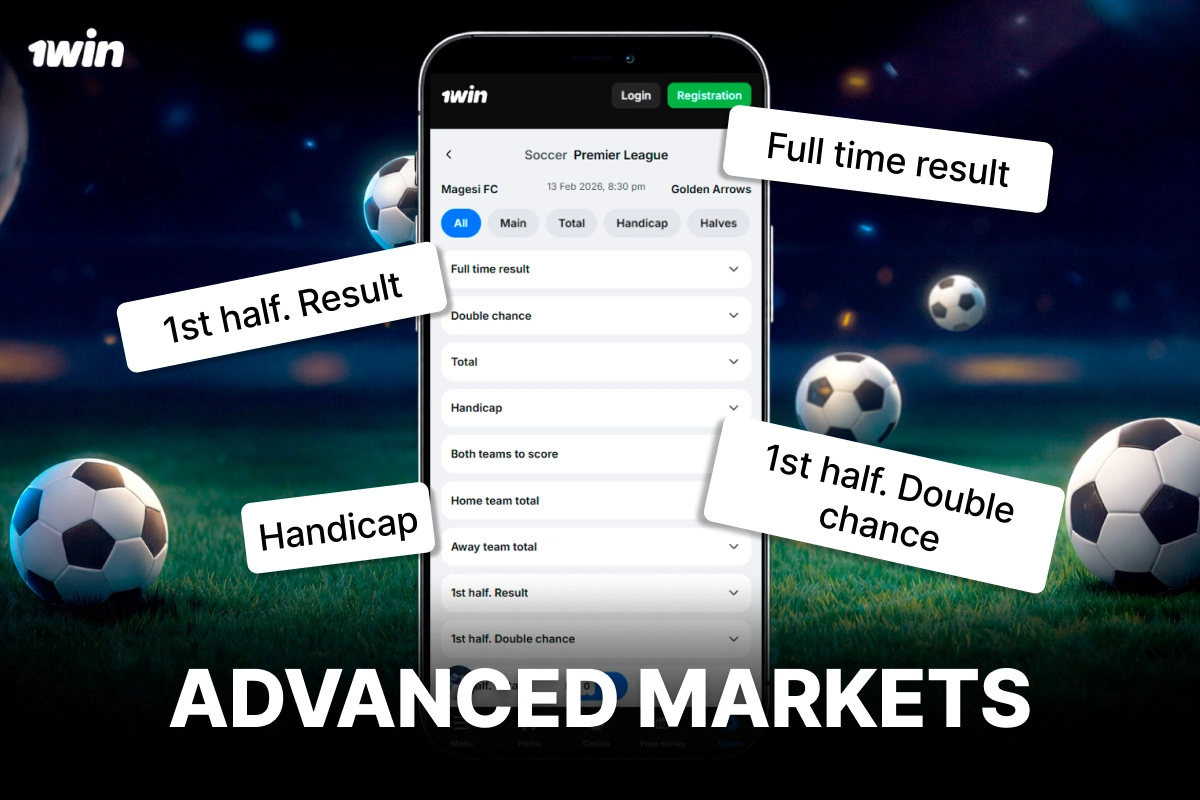
First Half/Second Half Analysis: Timing Your SA Football Bets
Betting on half-time goal distribution involves predicting in which half of a match more goals will be scored. The market typically offers three main options:
- More goals in the first half
- More goals in the second half
- Equal number of goals in both halves
This type of bet has been popular for a long time, though different bookmakers may label it differently. Regardless of terminology, the principle remains the same: focus on which period sees more goals.
When placing bets on half-time goal distribution, the exact scorer or method of scoring is irrelevant. What matters is simply the time frame in which the goal occurs, whether in regular or added time. Only the period of the goal influences this betting strategy.
Tactics play a key role, but statistical trends are clear: most goals tend to come in the second half. Between the 60th and 90th minutes, approximately 60–70% of goals are scored, with the final 15–20 minutes being particularly high-scoring, accounting for 30–35% of total goals. Understanding these timing patterns can help South African bettors optimize their strategies and place more informed bets.
Derby Day Dynamics: Unique Betting Approaches for Local Rivalries
Derby matches bring a distinct energy to football, especially in South Africa, where local rivalries ignite passion both on and off the pitch. For 1win football bettors, these games require more than standard predictions—they demand a nuanced approach.
Understanding team history, head-to-head records, and recent form is crucial. Derby matches often defy conventional statistics, with momentum, fan support, and psychological pressure playing decisive roles. South African derbies tend to see higher intensity in the second half, often resulting in late goals, which makes timing-based bets particularly appealing.
1Win users can leverage these insights by combining match statistics with in-play betting options, such as first-half/second-half goals, total shots on target, or even card counts. Tailoring strategies to the unique rhythm of local rivalries helps increase the accuracy of predictions and maximizes potential returns.
By recognizing the distinctive dynamics of derby days, South African bettors can move beyond generic forecasts and make more informed, strategic wagers on 1Win.
Psychological Edge in Football Prediction

Cognitive Biases That Sabotage South African Bettors
Humans are not always rational decision-makers. This is not a flaw, but a feature of the way our brains have evolved—our cognitive processes are optimized to save time and energy, often at the cost of accuracy. In the context of football betting, especially in South Africa, these inherent biases can significantly influence how bettors perceive matches, teams, and players.
What Are Cognitive Biases?
Cognitive biases are systematic errors in thinking—predictable deviations from logical judgment. They arise from mental shortcuts, or heuristics, that our brain uses to process information quickly. While these shortcuts can be efficient, they often lead to flawed assessments, particularly in complex, data-rich environments like sports betting. Understanding these biases can give bettors a measurable advantage, allowing them to make more informed decisions and avoid mistakes that others might overlook.
Common Cognitive Biases in Football Betting
- Confirmation Bias
Bettors often seek information that confirms their pre-existing beliefs while ignoring contradictory data. For example, a fan of Kaizer Chiefs might overestimate the team’s chances against Orlando Pirates, focusing only on past victories while discounting recent injuries or poor form. - Recency Effect
Recent events weigh more heavily than older data. A SuperSport United victory in their last match may cause bettors to overvalue their current form, even if historical trends show inconsistency. - Herd Mentality
Following popular opinion or media narratives is common in South Africa, especially during high-profile derbies. This can lead to inflated betting odds on favorites simply because “everyone is backing them,” rather than due to objective analysis. - Overconfidence Bias
Bettors may overestimate their knowledge or predictive abilities. A seasoned bettor might place large stakes on PSL matches assuming expertise guarantees success, ignoring statistical data that suggests a more cautious approach. - Anchoring
Initial information—such as pre-match odds or a famous pundit’s prediction—can unduly influence judgments. Even if subsequent evidence contradicts it, bettors may anchor their expectations to that first impression. - Availability Heuristic
Memorable or emotionally charged events, such as a dramatic Soweto derby, are more easily recalled and can disproportionately affect betting decisions, even if the event is statistically an outlier.
Applying This Knowledge to Football Betting
Understanding these biases allows South African bettors to step back and evaluate matches more objectively. Instead of reacting emotionally to headlines, social media chatter, or recent performances, bettors can focus on comprehensive data: team form, player fitness, head-to-head records, and tactical trends. Awareness of cognitive pitfalls can help manage risk, optimize bankroll allocation, and increase the likelihood of more strategic, disciplined betting.
While no bettor can eliminate all biases, recognizing their influence can provide a competitive edge. In a market as dynamic and unpredictable as football, even small improvements in judgment can translate into significant long-term gains.
The Momentum Factor: Reading Team Morale & Confidence Shifts
In football betting, raw statistics only tell part of the story. One crucial yet often overlooked element is momentum—the psychological and emotional state of a team that can influence performance beyond measurable metrics. In South Africa’s Premier Soccer League (PSL) and local derbies, understanding how morale and confidence fluctuate can give bettors a tangible edge.
Why Momentum Matters
Momentum reflects the collective energy, belief, and cohesion of a team. A squad riding high on consecutive wins or a dramatic comeback is often more confident, proactive, and resilient. Conversely, a team enduring losses, internal conflicts, or injuries may struggle to maintain focus, resulting in uncharacteristic mistakes or underperformance. Bettors who can identify these patterns early can better predict outcomes, particularly in close matches.
Key Indicators of Shifts in Team Confidence
- Recent Results and Streaks
- Winning streaks can boost morale, making teams more likely to take calculated risks and play aggressively.
- Conversely, losing streaks can induce cautious or erratic play, often leading to missed opportunities.
- Derby and Rivalry Impact
- PSL derbies, such as Kaizer Chiefs vs Orlando Pirates, carry extra emotional weight. A team that narrowly lost a previous derby may enter the next with heightened motivation—or anxiety—affecting both strategy and performance.
- Player Influence
- Key players’ form significantly impacts team confidence. If a top striker or playmaker is in peak form, teammates often perform better. Injuries or suspensions of these players can erode morale, even if the team has favorable statistics on paper.
- Coaching and Tactical Adjustments
- Positive tactical shifts or a coach’s motivational interventions can restore confidence, even after a poor run. In contrast, public criticism or internal disagreements can have the opposite effect, reducing cohesion and clarity on the field.
- Media and Fan Pressure
- South African football fans are passionate and vocal. Persistent negative media coverage or fan criticism can undermine player confidence, whereas strong support can elevate team performance, especially in home games.
Applying Momentum Analysis to Betting
For South African bettors, tracking momentum is not about guesswork—it’s about observing patterns and corroborating them with data. This includes analyzing recent results, lineup changes, player statistics, and even off-field developments. Matches with momentum shifts often provide value in markets like:
- Over/Under Goals: Confident teams may push for more attacking play.
- First-Half Leaders: Momentum often translates into early dominance.
- Match Result: Teams with high morale can outperform expectations despite statistical disadvantages.
Understanding momentum allows bettors to go beyond numbers and interpret the psychological undercurrents that shape match outcomes. In the fast-paced, competitive environment of South African football, reading morale and confidence shifts can turn an ordinary betting strategy into a strategic advantage.
Data-Driven Portfolio Management for Football Betting

Creating a Balanced Prediction Portfolio Across Multiple Leagues
For South African bettors on 1Win, successful football betting isn’t just about picking winners—it’s about managing risk and maximizing opportunities across multiple leagues. Building a balanced prediction portfolio allows players to diversify their bets, reduce exposure to unpredictable outcomes, and leverage insights from different competitions.
Why Diversification Matters
Focusing solely on one league, such as the PSL, exposes bettors to higher volatility. Injuries, referee decisions, or momentum shifts in a single competition can dramatically affect outcomes. By spreading bets across multiple leagues—like the PSL, CAF Champions League, South African lower divisions, or international tournaments—bettors can smooth out risk and capitalize on trends in different contexts.
Steps to Create a Balanced Portfolio on 1Win
- Analyze Multiple Leagues
- Use 1Win’s data tools to track team form, head-to-head stats, and goal trends across leagues.
- Compare patterns in local versus international matches to identify consistent performance indicators.
- Allocate Bankroll Strategically
- Divide your bankroll based on confidence levels and odds across leagues.
- For example, allocate more funds to PSL matches where you have strong insight and smaller stakes on international leagues with higher uncertainty.
- Mix Bet Types
- Combine single bets for high-confidence predictions with accumulators on complementary matches to maximize potential returns without overexposure.
- Consider markets like over/under goals, first-half leaders, or both teams to score to further diversify outcomes.
- Track Momentum and Context
- Monitor morale, recent streaks, and tactical adjustments across different leagues. Momentum in one competition may influence results in another, especially for teams participating in multiple tournaments.
- Review and Adjust
- Continuously assess the portfolio’s performance. Shift focus to leagues or teams showing consistent predictability while reducing stakes on high-risk matches.
Benefits for South African 1Win Users
- Reduced risk through diversification
- Better utilization of 1Win’s analytics and prediction tools
- Opportunity to exploit inefficiencies in less-followed leagues
- More consistent, sustainable betting strategy
By strategically spreading predictions across multiple leagues, South African bettors on 1Win can create a resilient, data-driven betting portfolio that balances risk and reward, transforming sporadic wins into long-term profitability.
Correlation Analysis in Accumulator Betting
Accumulator bets are popular among South African bettors on 1Win because they combine multiple selections into a single wager, offering the potential for high returns. However, one of the key challenges is understanding how the outcomes of individual matches interact, which is where correlation analysis becomes crucial.
What is Correlation Analysis?
Correlation analysis evaluates the relationship between different events in your accumulator. Positive correlation occurs when two events tend to happen together, while negative correlation occurs when one event makes another less likely. Ignoring correlations can make accumulators riskier than they appear.
Why it Matters in Football Betting
- Overlapping team dynamics: A team competing in multiple competitions or with squad rotation may influence the outcome of two matches simultaneously.
- League vs. cup performance: Teams might play more defensively in high-stakes cup matches while attacking freely in the league, affecting total goals and result predictions.
- Environmental factors: Weather, travel fatigue, or fixture congestion can impact several matches on the same day, creating indirect correlations.
Practical Example for South African Bettors
Suppose you place a 3-leg accumulator on:
- Kaizer Chiefs to win in PSL
- Orlando Pirates to score over 1.5 goals in PSL
- Mamelodi Sundowns to win in CAF Champions League
If Kaizer Chiefs and Orlando Pirates are facing each other in a different fixture or their squad selections depend on the same players, their outcomes are positively correlated. Ignoring this could overestimate your accumulator’s likelihood of success.
How to Use Correlation Analysis on 1Win
- Identify potential dependencies between matches using team line-ups, recent form, and competition context.
- Adjust stake size based on the degree of correlation; highly correlated selections may warrant a smaller stake.
- Select complementary bets to reduce risk—for instance, combining matches with low or no correlation.
- Leverage 1Win’s analytics tools to access historical match stats, goal distributions, and team performance trends across leagues.
Benefits for South African Players
- Reduces hidden risk in multi-leg bets
- Improves the accuracy of accumulators by accounting for linked outcomes
- Enhances strategic allocation of bankroll across correlated and independent selections
By applying correlation analysis, South African bettors on 1Win can make smarter accumulator bets, turning high-risk multi-leg wagers into data-driven, informed decisions with better long-term profitability.
FAQ
How does 1Win’s prediction model account for unexpected team news in PSL matches?
1Win’s prediction model adjusts for unexpected PSL team news—like injuries, suspensions, or lineup changes—by dynamically updating probabilities and odds using real-time data and historical player impact analysis.
What’s the optimal number of predictions to include in a single betting slip?
The optimal number is usually 3–5 selections per slip, balancing potential payout with manageable risk.
How can SA bettors verify the accuracy of 1Win’s historical predictions?
South African bettors can verify 1Win’s historical predictions by:
- Checking the “Bet History” or archive section in their account to review past picks.
- Tracking each prediction’s outcome over time and calculating win‑rate and ROI for themselves.
- Comparing published odds at prediction time with final match results to assess accuracy and value.